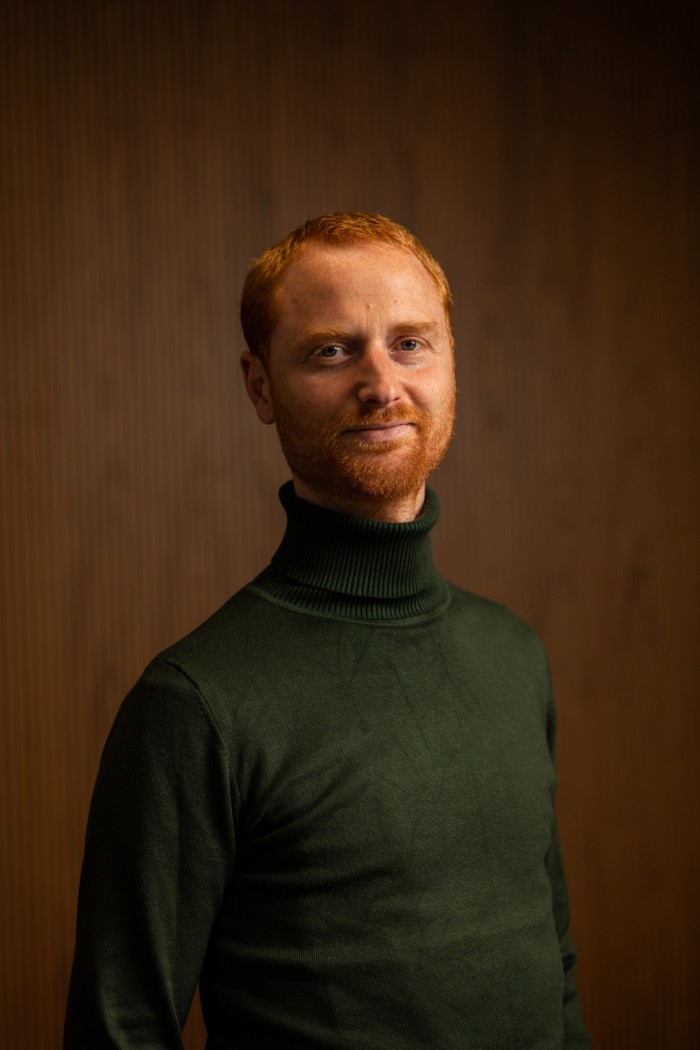
Lorenzo Todorow di San Giorgio is Associate Professor in Organisational Behaviour and Head of Executive and Leadership Coaching at UCL School of Management, where he leads the coaching strand across the MBA and executive education programmes. He is an ICF Professional Certified Coach (PCC) and holds the Advanced Certification in Team Coaching (ACTC).
Tell us about your background and what has shaped your career journey to date.
I’m Italian, and I’ve spent most of my working life in the UK. That gap matters more than it sounds. You’re never fully inside one system, so you keep noticing things the insiders have stopped seeing.
I studied philosophy first, undergraduate and postgraduate, mostly ethics and social philosophy, and then spent years on dialogue theory - how people actually talk to each other, and what breaks when they don’t. Which sounds like a detour from business schools until you’ve sat in enough boardrooms. Before UCL I was Deputy Director of the MBA at Portsmouth Business School, which is where I learned how a programme is actually built and held together, as opposed to how it looks in the brochure. Somewhere in there I also learned to play the saxophone, badly enough to keep me humble and well enough to keep going.
For a long time I ran two things in parallel that I assumed I’d eventually have to choose between: research and teaching on one side, coaching and consulting with organisations on the other. JLR, Costa, the UN, the NHS, Heathrow. Nobody ever made me pick, and I’m glad. The client work stops the teaching going abstract. The research stops the coaching becoming a set of tricks I’ve seen work before.
What’s shaped me most is a fairly ordinary observation from years of sitting with senior professionals - almost nobody has a skills problem. They know what to do. What stops them is who they think they’d have to become in order to do it. Everything I’ve built since comes out of that: the Leadership Accelerator, the coaching strand on the MBA, the diagnostic work.
What advice would you give to someone considering a career move or next step right now?
Be honest about what’s actually stopping you. Most people treat a move as a search problem - which role, which sector, which company. It’s usually an identity problem wearing a search problem’s clothes. You’re not short of options. You’re unsure who you are without the thing you currently do.
Two practical things.
Run it as an experiment before you run it as a decision. A conversation, a small piece of paid work, a weekend. Something reversible. People spend a year deliberating over questions that three phone calls would settle.
And decide in advance what would count as enough. Last year I turned down a role in another institution that on paper was everything I’d said I wanted. The deciding was miserable, mostly because I hadn’t done the work of naming what I was actually optimising for. Once I had, the answer was obvious, and I’d make it again with the same information.
What has made your involvement with the UCL Flex MBA programme particularly meaningful to you?
The students.
Flex MBA participants are doing this while running teams, businesses, families. They arrive having had the difficult conversation on Tuesday. Nothing is hypothetical. When we work on power, or on what it costs someone to be disliked, there’s a real person in a real office attached to it. You can’t teach leadership honestly to people with nothing at stake.
That’s why I’ve pushed the coaching strand where I have. We ran what we believe is the first T-group in a UK MBA - group work where the material is simply what’s happening in the room, between the people in it, right then. It’s uncomfortable. Some people hate the first hour. Almost nobody is neutral about it afterwards. Around that sits the Leadership Accelerator, the one-to-one coaching, and now the work with Janice so that careers and coaching aren’t running in separate lanes.
What I find meaningful is quite narrow: watching someone recognise a pattern they’ve been running for twenty years and decide, out loud, in front of other adults, to stop. That happens here more than anywhere else I teach.
What is one common misconception people have about your industry or career path?
That coaching is advice. Or its cousin - that it’s what you’re given when something has gone wrong.
Neither. If I could just tell people what to do I’d send an email and save us both the hour. The work is almost entirely about helping someone see what they do that they can’t see themselves: the move they make under pressure, the thing they reliably avoid, the story they tell about why they had no choice. Nobody can see their own back.
The related one is that it’s soft, meaning unrigorous. There are decades of behavioural science underneath it, properly validated instruments, and a body of research on teams (Hackman’s, mainly) that tells you fairly precisely when an intervention will land and when it will bounce off. Good coaching often makes people feel worse for a fortnight and considerably better for a decade. The tools aren’t vibes, and neither is the discomfort.